

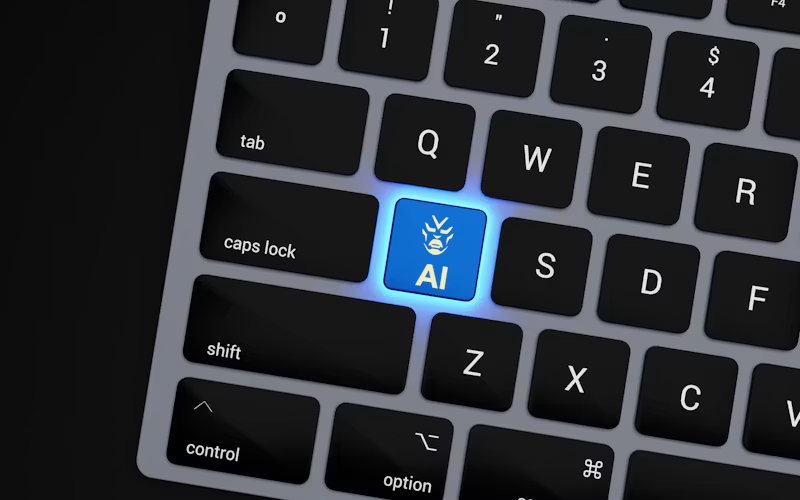
In The World Of AI: How Are Small Businesses Adapting?

Artificial intelligence has made a huge impact on the modern world over the past few years. I remember when it first entered my life in 2022 during my senior year of high school. ChatGPT had just been released, and many of my classmates quickly began using it to complete their homework. At the time, I scoffed at the idea of relying on AI, not realizing how significant it would soon become.
Now, as I enter my senior year of college, AI has changed the way I learn and work. Professors have adjusted their curricula in response to the growing use of AI. Some have placed more emphasis on exams and in-class assignments, assuming students may use AI for work completed outside the classroom. Many business professors have also begun teaching students how to use AI responsibly rather than simply condemning its use—because at this point, avoiding it entirely feels nearly impossible.
As I prepare to enter the business world, I have become interested in learning how Vermont businesses are adapting to advancing AI technology. In marketing, AI can be a valuable asset. It can help businesses analyze customer data, identify consumer insights, create website templates, brainstorm content, and summarize client meetings. AI has transformed the way many marketing tasks are completed, making certain processes faster and more efficient.
While learning about AI’s role in marketing, I became curious about how small businesses in other industries are using the technology. AI can be a more accessible and affordable option than hiring someone to complete certain tasks, but ask almost any professional, and they will likely tell you not to rely on it too heavily. With this in mind, I spoke with several BootstrapVT clients about how AI fits into their businesses—and the benefits and concerns that come with it.
AI And The Importance Of Human Connection
The first business owner I spoke with was Jackie Corbally, the owner of the Center for Trauma Recovery (C4TR) in Essex Junction.
Jackie’s generation was accustomed to going into an office each day and interacting with people face-to-face. However, since the COVID-19 pandemic, many social norms have changed. Virtual interactions have become increasingly common, and people have grown more comfortable communicating through a screen rather than meeting in person.
This shift has also affected the world of therapy. When Jackie started C4TR, she listened to her clients and learned that many women felt safer participating in therapy sessions from the comfort of their own homes rather than attending in person.
While AI has been useful to Jackie for tasks such as writing blog posts, checking grammar, and making quick formatting adjustments, it can be concerning in the field of trauma recovery. AI is not designed to truly understand or reflect human emotion, yet it has become a place where people share their feelings and search for answers.
As Jackie explained:
“We have people in pain that want a quick fix…but remember AI doesn’t have emotionality, it can’t pick up the pain of the person that’s typing or talking into it.”
Although AI may provide logical suggestions that some people find helpful, its responses can also be inaccurate, insensitive, or potentially harmful. For someone experiencing trauma or navigating a mental health challenge, receiving the wrong guidance could worsen their condition and lead to serious consequences.
Jackie’s perspective highlights an important distinction: AI can be a valuable tool for technical tasks, such as proofreading a blog post or brainstorming content ideas, but it can become dangerous when people rely on it too heavily—especially in fields centered on mental health, trauma, and human connection.
Bringing AI Into The Beehive
My next interview was with Curtis Mraz, a fourth-generation beekeeper at Champlain Valley Apiaries (CVA), a honey farm based in Middlebury, Vermont.
With nearly 100 years in business, Champlain Valley Apiaries is one of the largest apiaries in New England. The company has generations of knowledge in beekeeping and agricultural practices, which made me curious: How are beekeepers and farmers adapting to a world increasingly shaped by AI?
The answer surprised me.
Beekeeping is an extremely labor-intensive and time-consuming practice. Curtis explained the process of checking each of the thousands of hives maintained by CVA. Testing a single hive for pests and colony strength can take approximately three to five minutes. However, with new AI technology and a 15-second audio recording, beekeepers can gather information about colony strength, pest levels, and whether a queen bee is present and actively producing eggs.
For Curtis, this technology represents a major shift in an industry that has traditionally relied on long-established practices.
“Yeah, it’s exciting. It’s really cutting-edge because, in the beekeeping world, we’ve been using the same technology for a long time.”
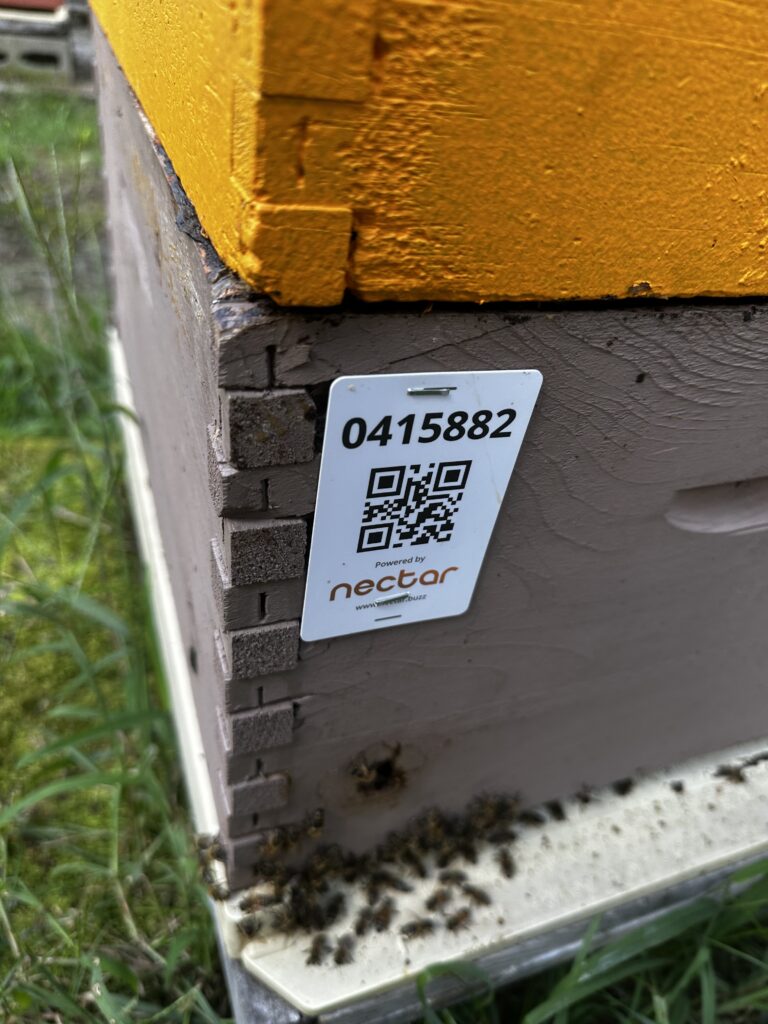
CVA has also reduced its reliance on paper records by using Nectar Technologies, which utilizes QR codes to identify individual hives and digitally track and manage their progress.
These technologies have the potential to save significant time and improve efficiency. For Curtis, the benefits extend beyond making daily operations easier—they can also contribute to healthier bee colonies.
“It’s saving me a ton of time, energy, money on labor, and ultimately the outcome is healthier, happier bees. So I am pro-AI in that situation, but with a grain of salt. It all has to be considered, I think.”
While AI has helped improve efficiency at CVA, Curtis also raised concerns about the environmental resources required to support AI and data centers. Data centers can require large amounts of energy and water, and their development may affect surrounding ecosystems and valuable pollinator habitats.
AI and farming may not seem like an obvious combination, but Curtis offered a unique example of how even traditional agricultural industries can benefit from modern technology. At the same time, his perspective serves as a reminder that the environmental effects of AI should be considered alongside its potential benefits.
AI Cannot Replace Human Relationships
The final person I spoke with was Chelsea Bardot Lewis, the executive director of Vermont Businesses for Social Responsibility (VBSR).
VBSR is a nonprofit organization that brings Vermont’s business community together to use its collective influence to create positive social, economic, and environmental change.
When discussing AI’s role at VBSR, Chelsea emphasized the importance of human connection:
“It can never replace human connections, and we’re in the business of human connections. So, in some ways, AI can’t replace what happens when you bring a group of business leaders in the room. And so we’re excited to be able to continue to provide this service that is truly like—you can’t AI that. But in order to fulfill that goal, you also can’t really AI someone sitting in the seat in the legislature advocating for the policies that we’ve advocated for and those policy wins that we’ve had.”
For Chelsea and the team at VBSR, AI has taken more of a supporting role in daily operations. During her onboarding as executive director, Chelsea used AI to help compile and organize nearly 40 years of financial data. The technology helped her better understand the organization’s history and identify potential next steps. AI has also been useful for applying VBSR’s brand insights and language to written content.
Because VBSR is committed to advocacy and environmental impact, I was curious whether the environmental effects of data centers had been a topic of discussion. After hearing Curtis discuss the potential environmental concerns associated with data centers, I asked Chelsea how VBSR approaches the issue.
“We are not going to change whether or not AI is here and whether or not data centers are needed. That said, we have members who are looking at electrifying data centers—using renewable energy, solar, and other renewables to power those data centers to minimize their impact. I think that is a great place for VBSR innovation: let’s look at something that is already coming and see how we can make this have less of an impact.”
Chelsea brought up an important point. Whether we like it or not, AI is already a major part of our lives and will likely continue to shape the future. The question is not whether AI will exist, but how we choose to use it.
This is especially important when considering data centers. Their energy and water demands, along with their potential effects on surrounding environments, have raised concerns. However, as Chelsea explained, there is also an opportunity to approach these challenges more consciously. Using renewable energy, such as solar power, and developing more sustainable infrastructure could help reduce AI’s environmental impact.
Rather than simply rejecting AI or accepting its growth without question, businesses and communities have an opportunity to consider how the technology can be used more responsibly.
Finding The Balance
These are only a few examples of how AI is being integrated into small businesses across Vermont. From supporting marketing efforts and organizing decades of financial information to helping beekeepers monitor thousands of hives, AI is creating new opportunities for businesses to work more efficiently.
At the same time, each conversation revealed important limitations. AI cannot replace the empathy and emotional understanding needed in trauma recovery. It cannot recreate the relationships built when business leaders come together in person. And its environmental impact cannot be ignored as the technology continues to expand.
AI is not simply good or bad—it is a tool. Like any tool, its impact depends on how people choose to use it.
As small businesses in Vermont and around the world continue adapting to AI, the goal should not be to replace human knowledge, creativity, or connection. Instead, businesses should focus on using AI constructively: allowing technology to support people, improve efficiency, and create new possibilities while keeping human judgment, responsibility, and connection at the center.
Sorry, the comment form is closed at this time.